The Art of Looking: A Beginner’s Guide to Developing Your Aesthetic Sense
While many people believe that aesthetic sense is an innate talent, the reality is that a designer’s “eye” is trained through conscious observation and constant practice. “Everything has its beauty, but not everyone sees it,” said Andy Warhol, and in the world of graphic design, this observation becomes an essential skill. The difference between an ordinary viewer and a graphic designer lies in the ability to decipher the “why” behind an image, transforming intuition into a clear methodology.
This article is dedicated to all those who want to refine their visual taste, and especially to those who are taking their first steps in a graphic design career. Next, we will explore methods to create the habit of analyzing structures, colors, and compositions in everything that surrounds us.
While the general public passively “consumes” visuals, the designer analyzes them as a mechanism: he looks for hierarchy that guides the gaze, contrast that creates emotion, and structure that provides clarity to the message. This form of critical thinking transforms simple observation into a process of visual engineering, where every pixel, font, or empty space has a precise purpose in communication.
Why the Aesthetic Sense Is Not an Instinct, But a Discipline
The ability to distinguish an exceptional design from a mediocre one is not a mystical gift, but the result of a trained attention to notice order where others see only noise. But why does this process not come naturally to us?
- Overview: Our brains process the world through rapid symbols and generalizations. Although biology provides us with the sensory tools, the brain simplifies information to survive, not to analyze design. It puts quick labels on objects to save energy. We see a tree, not a branched structure with a rough texture, or we see a shadow, not an irregular geometric shape with diffuse edges that gives depth to the ground.
- Cultural conditioning and social norms: Our taste is shaped by the environment in which we live. We learn what is “beautiful” or “in good taste” according to the visual standards of our family, society, or the era in which we live.
- The Exposure Effect (Familiarity): The human brain tends to prefer things that are familiar. Our aesthetic preferences are deeply marked by what we have been taught to see repeatedly, which can create a natural resistance to new or complex visual concepts.
10 Practical Exercises to Develop Your Aesthetic Sense
Developing your aesthetic sense doesn’t happen overnight, but rather is the result of small daily habits. The following exercises are designed to work as a workout for your creative mind:
1. Practice Visual Deconstruction
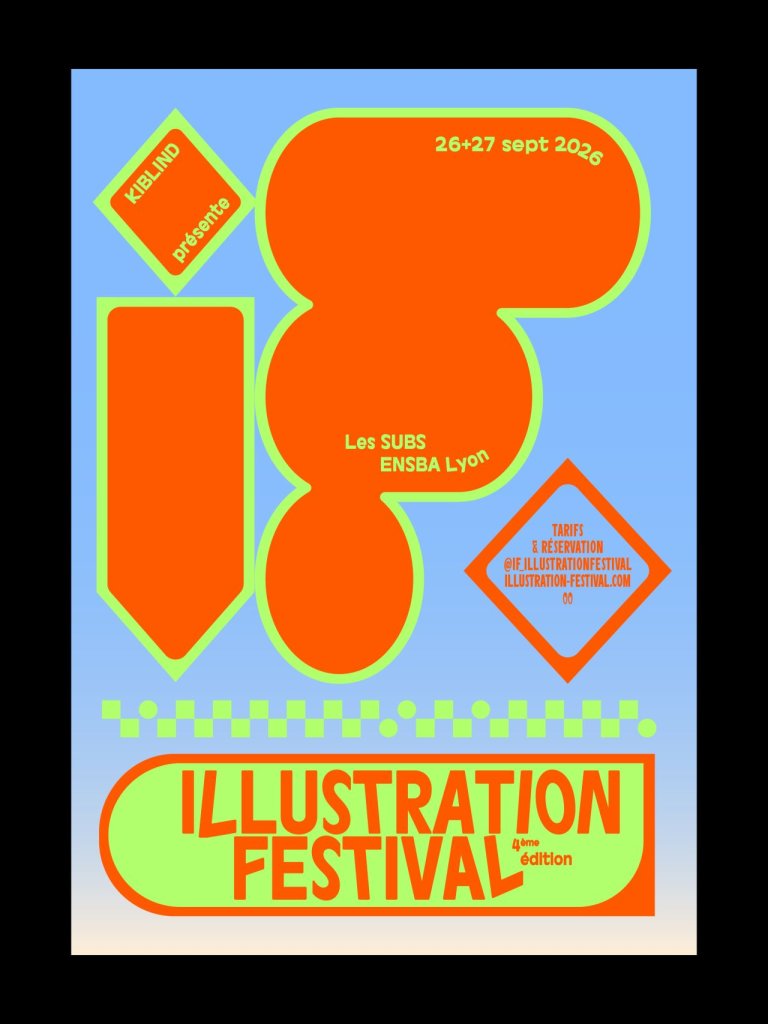
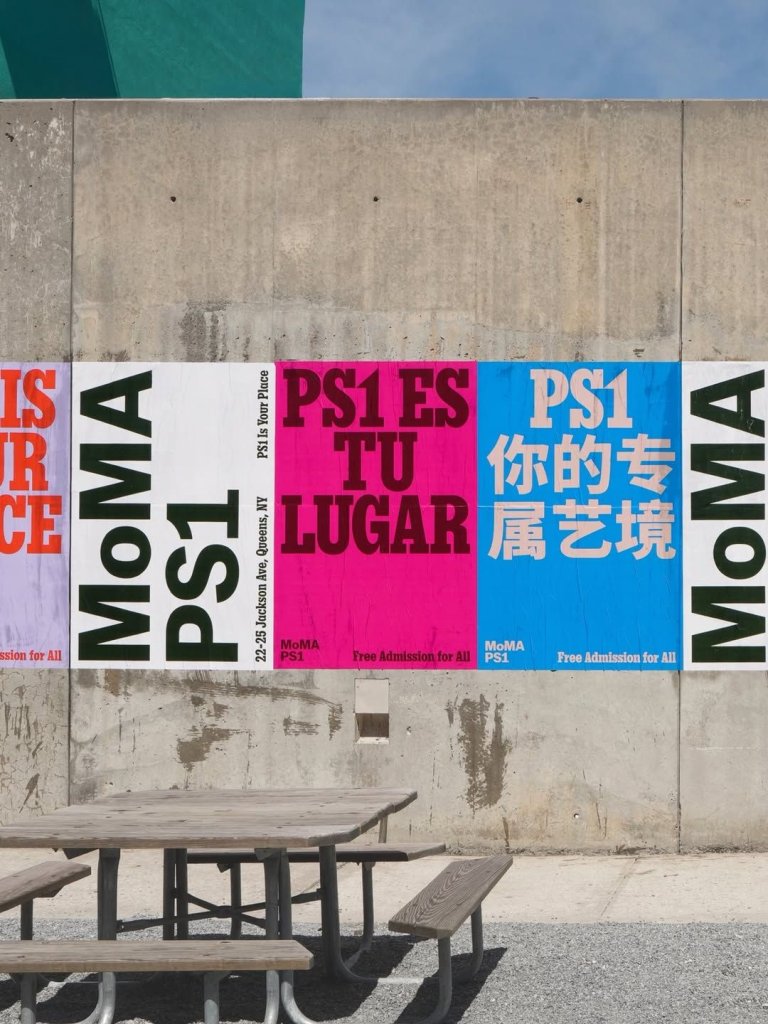
When you see a design that appeals to you, don’t just “like it”. Ask yourself why it works: what is the main element, how are the texts aligned, and what colors create harmony?
Here’s a super useful free resource to get you started: TYPE Posters. This platform serves as a huge gallery of inspiration, where you can find some of the most creative and innovative typographic works made by designers around the world every day.
Posters are an excellent choice for this exercise. A poster is visual communication reduced to its purest essence. With only one static frame at its disposal, a poster is forced to make the most of the rules of design to instantly capture attention. By looking at posters, it will be much easier for you to isolate and observe the mechanisms behind it: you will clearly see how the visual hierarchy is built (what element catches your eye first and where your gaze then goes), how contrast is used to create impact, and how negative space supports the entire composition.
 |  |  |
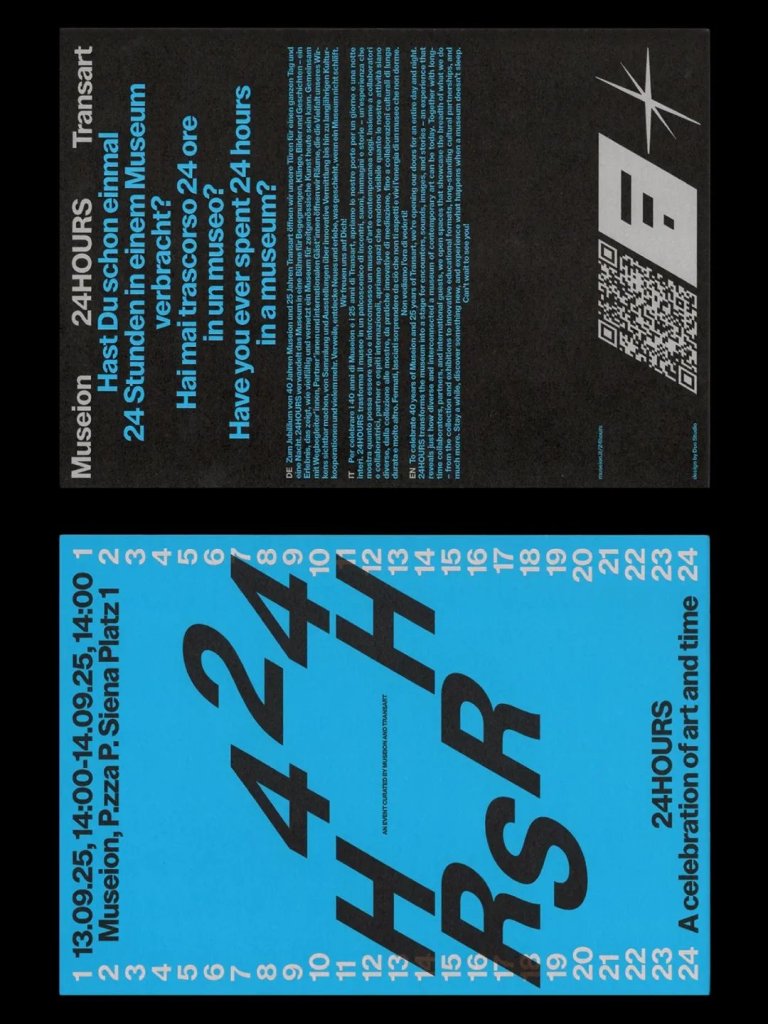 | 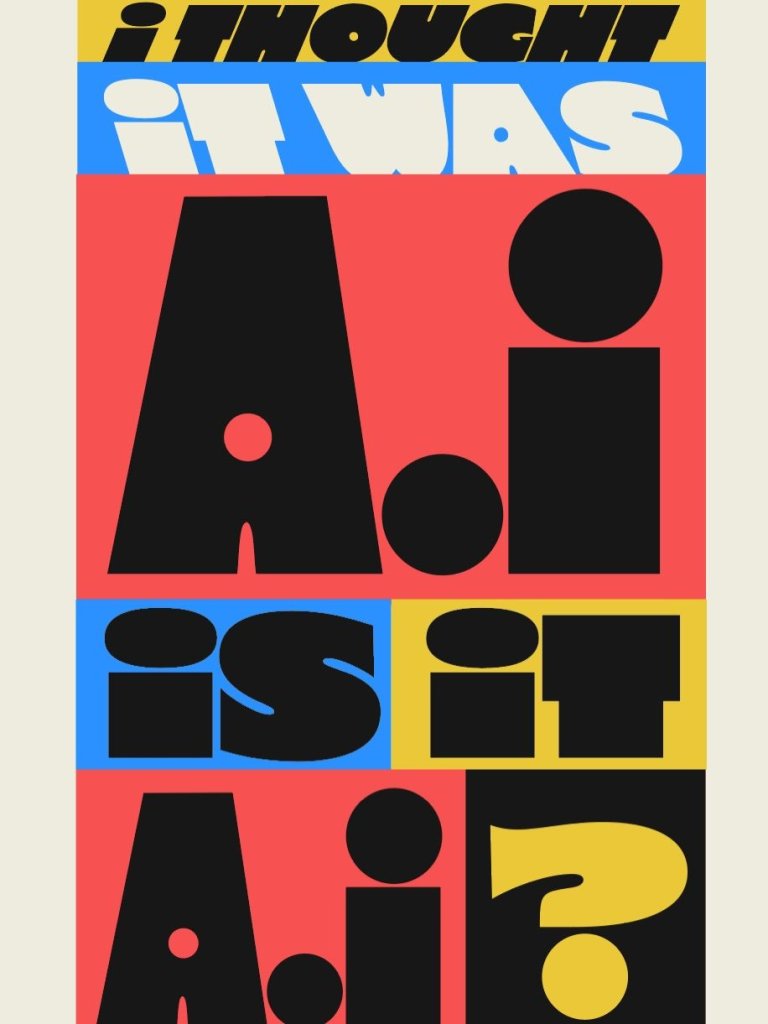 | 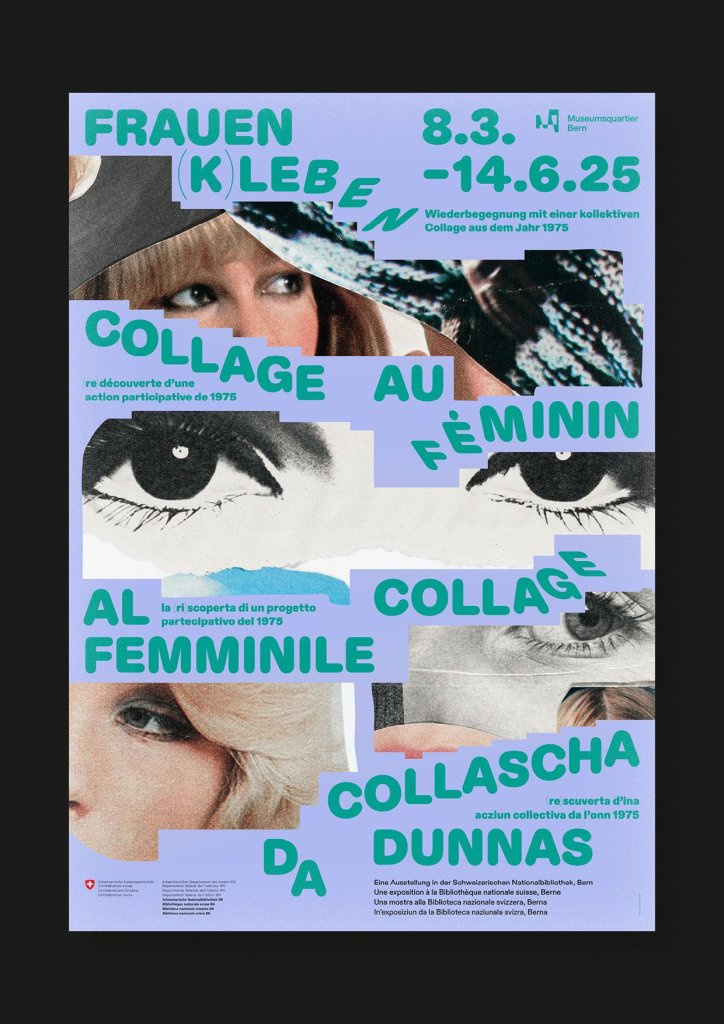 |
Inspiration source: The posters in this exercise were taken from the LinkedIn page Typeposters.
2. Analyze Graphic Design Portfolios
When exploring graphic design portfolios on platforms like Behance or Dribbble, don’t passively consume the images. Read the case studies to understand the logical process and decisions behind each pixel.
To make it easier for you to get started, in this article, you can follow the top 10 portfolios chosen by us, where we have selected remarkable examples of organization, structure, and technical execution from which you can learn a lot.
3. Collect a “Swipe File”
Create a digital space where you can save everything that inspires you (typography, layouts, color palettes). Reviewing it periodically will help you identify stylistic patterns that appeal to you. If you don’t know where to organize this collection, here are some of the most popular options among designers. The most suitable platforms for this exercise are: Muzli, Savee.it, Pinterest, Dribble, the real world/phone camera.
4. Look For Negative Space
Learn to look not only at objects (positive space), but also at the gaps between them. Well-used negative space is the secret to airy and elegant designs.
Below in this article, I have prepared some very good visual examples that will show you exactly how you can turn the “nothing” in the background into a memorable message.
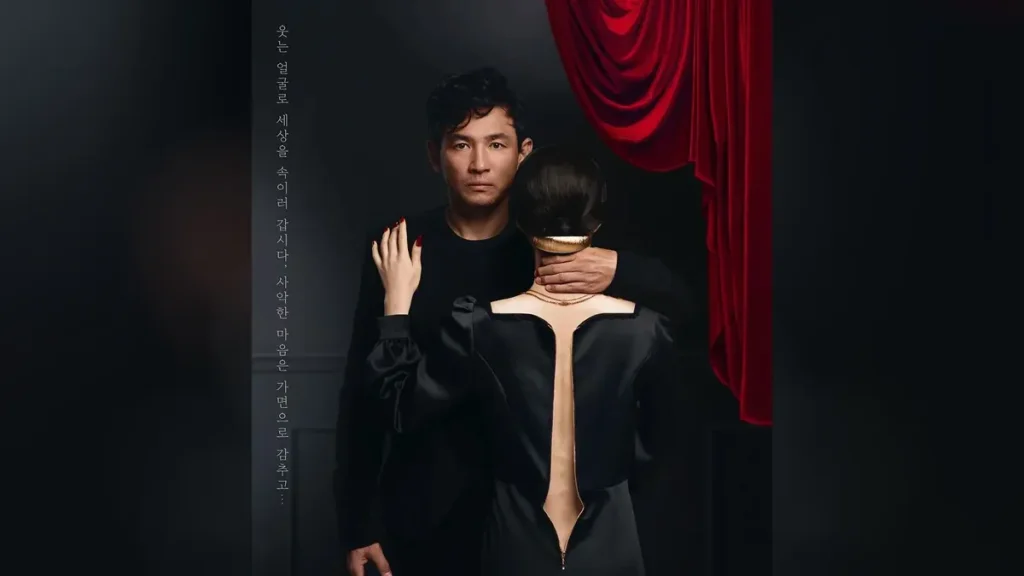
Source: Creative Bloq
 | 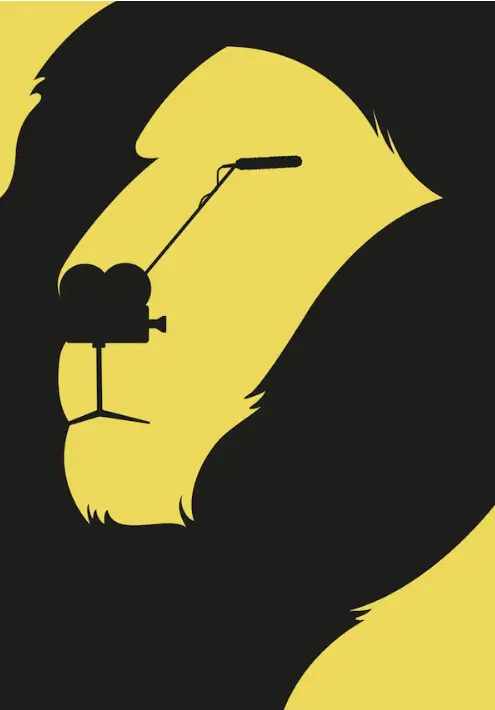 |  |
Works by Noma Bar
Source: Digital Synopsis
5. Doodling
You don’t have to be a talented illustrator. Simply drawing geometric shapes, quick layouts, or ideas on paper improves your hand-eye coordination and sense of proportion. Paper frees you from the temptation to get everything perfect the first time, allowing you to test out structures and compositions in just a few minutes. Without colors or software effects to distract you, you’ll learn to build a solid visual hierarchy from the rough phase of your project.
6. Copywork
If you’re just starting out and wondering how to learn graphic design from scratch, one of the most effective methods is to exactly replicate a piece created by a professional. It will force you to notice subtle spacing and proportion decisions (Note: use this method strictly for personal study, not to take on the work).
7. Visit Museums and Study Art
When it comes to museums, don’t limit yourself to just classic art or what you already like. The foundation of graphic design lies in the history of the visual, but innovation often emerges at the intersection of styles. There are hundreds of art, photography, design, or architecture museums around the world that expose you to unfamiliar, experimental, or seemingly chaotic styles.
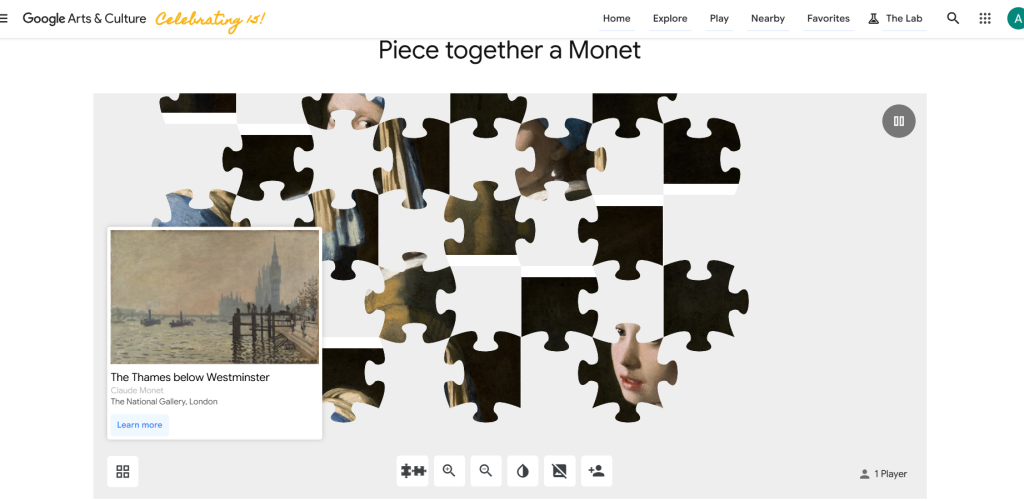
If you can’t physically get to a museum, we live in a lucky era. The Google Arts & Culture platform is basically the world’s largest online museum. Here you can virtually visit, at incredible resolution (sometimes down to the texture of the brush on the canvas), entire galleries from MoMA (New York), Tate Modern (London), or the Louvre Museum (Paris).
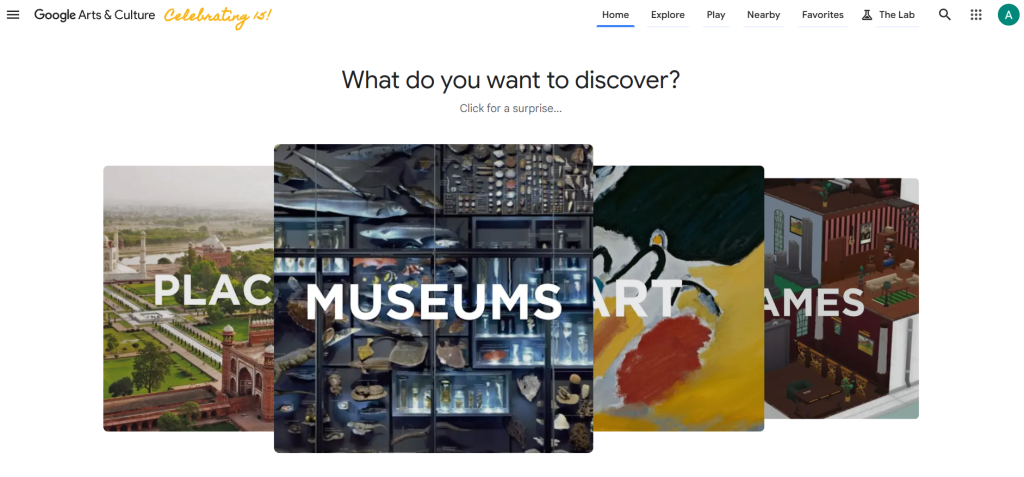
Moreover, the platform hides a super useful functionality: a whole section of games, visual puzzles, and interactive experiments based on famous works of art.
8. Follow the Art History
The rules of composition that seem natural to us today did not appear out of nowhere, but are the result of decades of experiments and visual manifestos. Make it a habit to choose a historical movement and deconstruct its rules. This way, you will understand why certain visual arrangements are universally perceived as harmonious. Here are three excellent examples from which you can start this exercise:
- Bauhaus: Here you will discover the absolute principle: “form follows function”. By studying posters and their architecture, you will train your eye to eliminate unnecessary ornamentation and observe the communicative power of basic geometric shapes (circle, square, triangle) combined with primary colors. It teaches you to look at utilitarian, pure aesthetics.
- Swiss Design (International Typographic Style): It is the school of mathematical perfection. When you analyze Swiss works from the 1950s, your exercise is to try to visualize the invisible grids that align the elements to the millimeter. You will learn how to use asymmetry, massive negative space, and clear typography to create order out of chaos.
- Art Deco: In contrast to strict functionality, this trend teaches you how geometry can become spectacle. Consider how the rigorous symmetry, sharp angles, elongated vertical lines, and dramatic color contrasts instantly convey the idea of luxury, movement, and progress.
9. Take a Visual Break
Screen overload and the avalanche of images on social media can dull your aesthetic sense. To reset your eye’s sensitivity to fine details, you need intentional breaks. Get out into nature, which is basically a masterclass in organic design. When you eliminate excess visual stimuli, you retrain your eye to see the importance of negative space, light, and absolute simplicity again, elements that you will then bring with much greater clarity to your own projects.
10. Take a Graphic Design Course
Nothing accelerates the development of your aesthetic sense more than direct feedback. Practical exercises guided by a professional trainer are a great way to hone your ability to think and see like a graphic designer.
If you are ready to turn your aesthetic sense into a career and want to learn in a structured way, under the guidance of industry experts, we are waiting for you at the Graphic Design course of NewTech Academy.
Frequently Asked Questions
A refined aesthetic sense is exactly what makes the difference between amateur-level work and one that attracts clients. By training yourself to notice fine details, such as negative space or alignments, you will know exactly what to include and what to correct in your own projects. Moreover, by constantly analyzing the best graphic design portfolios, you will understand how to present your own work as logical case studies, demonstrating to employers that you have strategic visual thinking behind every pixel.
Although developing an aesthetic sense takes time and small daily habits (like collecting a Swipe File, analyzing art history, or reproducing top works), the fastest way to evolve is to get direct and objective feedback. Individual study forms the basis, but participating in a practical course with a professional trainer speeds up the process massively. A mentor will instantly identify your errors in proportion or contrast, correcting that “autopilot” much faster than you could do it yourself.
No, you don’t have to be a talented illustrator to become a designer. As we mentioned in the guide, doodling exercises are aimed at understanding proportions, hierarchy, and how you place elements on the page.
A “Swipe File” is a personalized digital collection where you save your favorite visual references, from color palettes and fonts to complex layouts.
Articol publicat de Alexandrina Tochir
Alexandrina lucrează în marketing de peste 5 ani și e pasionată de comunicare, design și învățare continuă. Scrie articole despre tehnologie, reskilling și upskilling, iar interesul ei pentru graphic design se reflectă în felul în care pune accent pe claritate vizuală și estetică în tot ce creează.